w w w . r b o . o r g . b r
Original
article
Patellar
tendinopathy:
late-stage
results
from
surgical
treatment
夽
Marcos
Henrique
Frauendorf
Cenni
a,∗,
Thiago
Daniel
Macedo
Silva
b,
Bruno
Fajardo
do
Nascimento
a,
Rodrigo
Cristiano
de
Andrade
a,
Lúcio
Flávio
Biondi
Pinheiro
Júnior
a,
Oscar
Pinheiro
Nicolai
aaGrupodeJoelhoBeloHorizonte(GJBH),BeloHorizonte,MG,Brazil bHospitalMaterDei,BeloHorizonte,MG,Brazil
a
r
t
i
c
l
e
i
n
f
o
Articlehistory: Received3July2014 Accepted2September2014 Availableonline8September2015
Keywords: Patellartendon Tendinopathy/surgery Retrospectivestudies
a
b
s
t
r
a
c
t
Objective:Toevaluatethelate-stageresultsfromsurgicaltreatmentofpatellar tendinopa-thy(PT),usingtheVisascore(VictorianInstituteofSportTendonStudyGroup)andthe Verheydenmethod.
Methods:Thiswasaretrospectivestudyinwhichthepostoperativeresultsfrom12patients (14knees)whowereoperatedbetweenJuly2002andFebruary2011wereevaluated.The patientsincludedinthestudypresentedpatellartendinopathythatwasrefractoryto con-servativetreatment,withoutanyotherconcomitantlesions.Patientswhowerenotproperly followedupduringthepostoperativeperiodwereexcluded.
Results:UsingtheVerheydenmethod,ninepatientswereconsidered tohaveverygood results,twohadgoodresultsandonehadpoorresults.InrelationtoVisa,themeanwas 92.4pointsandonlytwopatientshadscoreslessthan70points(66and55points). Conclusion:Whensurgicaltreatmentforpatellartendinopathyiscorrectlyindicated,ithas goodlong-termresults.
©2014SociedadeBrasileiradeOrtopediaeTraumatologia.PublishedbyElsevierEditora Ltda.Allrightsreserved.
Tendinopatia
patelar:
resultados
tardios
do
tratamento
cirúrgico
Palavras-chave: Tendãopatelar Tendinopatia/cirurgia Estudosretrospectivos
r
e
s
u
m
o
Objetivo:Avaliarosresultadostardiosdotratamentocirúrgiconatendinopatiapatelar(TP) comousodoescoreVisa(VictorianInstituteofSportTendonStudyGroup)eométodode Verheyden.
Métodos:Estudoretrospectivoqueavaliouosresultadospós-operatóriosde12pacientes, ou14joelhos,entrejulhode2002efevereirode2011.Foramincluídosospacientescom tendinopatiapatelarrefratáriosaotratamentoconservadorequenãoapresentavamoutras
夽
WorkperformedintheOrthopedicsandTraumatologyService,HospitalMaterDei,BeloHorizonte,MG,Brazil.
∗ Correspondingauthor.
E-mails:[email protected],[email protected](M.H.F.Cenni).
http://dx.doi.org/10.1016/j.rboe.2015.08.013
lesõescirúrgicasconcomitantes.Pacientesquenãoforamdevidamenteacompanhadosno períodopós-operatórioforamexcluídos.
Resultados:PelométododeVerheyden,novepacientesforamconsideradosmuitobons,dois bonseumruim.Emrelac¸ãoaoVisa,amédiafoide92,4pontos,comapenasdoispacientes abaixode70pontos(66e55pontos).
Conclusão: Otratamentocirúrgicodatendinopatiapatelar,quandocorretamenteindicado, tembonsresultadosemlongoprazo.
©2014SociedadeBrasileiradeOrtopediaeTraumatologia.PublicadoporElsevier EditoraLtda.Todososdireitosreservados.
Introduction
Patellartendinopathyisacommondisorderamongathletes, especially in activities that involve jumping and eccentric overloadingonflexedknees.1,2 Itwas initiallydescribed as
jumper’s knee by Blazina et al.,3 and it also has synonyms relatingtoindividuals’specificsportspractices,suchas: high-jumper’sknee,volley-baller’skneeandcross-countryknee.4
Itgenerallyaffectsindividualsaged20–40years,with sim-ilarprevalenceinmenandwomen.Itoccursmostfrequently atthelowerpoleofthepatella(70%),followedbytheupper pole(25%)andlastlythedistalinsertionofthetendon(5%).5
Patellartendinopathypresents aswell-localizedanterior kneepain thatrelates to physicalactivity. Thepain gener-allybegins insidiouslyand gradually, relatingto increasing quantityandintensityoftraining,ortoactivitythatrequires repetitivekneemovements.6
Inhistologicalstudies,thetendonpresentsdegenerative andinflammatoryalterationsthatmayresultinmicrotears, especiallyclosetothelowerpoleofthepatella.7
Blazina’sclassificationwasthefirsttobeusedincasesof patellartendinopathy3anditdividedthepainintofourgrades: gradeI–mild pain afterphysicalactivity;grade II–pain at thestartofphysicalactivity,withimprovementafter warm-ingupandworseningattheendoftheexercise,withoutany decrease inyield;gradeIII –painduring and afterphysical activity,withsignificantworseningoftheathlete’syield;and gradeIV–partialortotaltearingofthetendon.Subsequently, itwasmodifiedbyRoelsetal.8
Amongtheintrinsiccausesofpatellartendinopathy,the followingcanbehighlighted:deficiencyofthebloodsupply andlowerelasticityoftheproximalsegmentofthetendon4; anddegenerationsecondarytoachronicinflammatory pro-cessinthetissuesadjacenttothetendonandboneimpact duringflexion,duetoaprominentlowerpoleofthepatella.9 Theextrinsicfactorsarerelatedtoerroneoustraining,poorly guidedphysicalactivitiesandotheroverloadsinaflexed posi-tionwithinday-to-dayactivities.
The diagnosis is based on the history and the clinical
examination, and is complemented byradiographic,
ultra-soundandmagneticresonanceimaging(MRI)examinations.
Radiographyshowsthemorphologyoftheinferiorpoleofthe patellaandmayshowcalcificationsinthetendon,while
ultra-sonographyandMRImayshowstructuralandinflammatory
alterationsofthetendon,suchasthickening,degeneration andtears.10,11
Theinitialtreatmentisconservative,withtheaimsofpain relief and functional recovery. Itbegins with institutionof relativerest,modificationofactivitiesandcontrolover pre-disposingfactors,inassociationwithuseofmedicationsand physiotherapy.Thisiseffectiveismostcases,butwithariskof recurrence.12–15Functionalrehabilitationconsistsofanalgesic andanti-inflammatorymeasuresinassociationwith mechan-icaltherapyconsistingofeccentricstrengtheningandspecific stretching.16–18
Other treatment options such as injection of
corti-costeroids are also used, although many authors present
divergent opinions regarding their efficacy and safety.19
Application ofplatelet-rich plasma has been gainingmore
followers,buttheresultspresentedremaininconclusive.20,21 Surgicaltreatmentisindicatedincasesthatevolvewith
persistent painand functional limitation after aminimum
periodof6monthsofwell-executedconservativetreatment.22
The presence of structural alterations of the tendon and
impactwiththelowerpoleofthepatellaarefactorsrelating tofailureofconservativetreatment.23
The surgical treatment consists of debridement of the
degeneratedtissuebymeansoflongitudinalcutsinthe ten-donand abrasion ofthe inferiorpoleofthe patella. Itcan bedoneinconformitywiththetechniquedescribedby Blaz-ina et al.3 (open) or arthroscopically.24,25 The objective of the presentstudy was todemonstratethelate-stageresult fromsurgicaltreatmentofpatellartendinitisinpatientswho evolvedpoorlywithconservativetreatment.
Materials
and
methods
Thiswas aprospectivestudy inwhichthe late-stage post-operativeresultsfrom12patients(14knees)whounderwent operationsbetweenJuly2002andFebruary2011were evalu-ated.
Twenty-one patients with a diagnosis of patellar
tendinopathy that was resistant to the initial treatment
underwent surgical treatment performed by the same
surgeon.Thesepatientscomprised20menandonewoman.
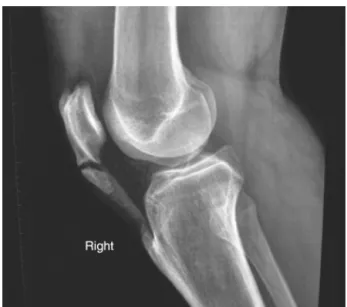
Fig.1–Radiographshowingalterationofthemorphology ofthepatella,withthepointinitslowerpole(prominent patella).
Seven patients were excluded because they presented
otherconcomitantsurgicallesions(threewitharthrosis,two withsignificant patellarchondropathy,onewithalesionof
themedialmeniscusandonewithassociatedtendinopathy
ofthequadriceps).Twopatientsdidnotreturnforthe late-stagereassessments.Twelvepatientsweredulyfollowedup andunderwenttheassessmentprotocol.
Thediagnosisofpatellartendinopathywasbasically
clin-ical,groundedinthe anamnesisandphysicalexamination.
Themainclinicalfindingwaspainonpalpationofthelower poleofthepatella.Otherfindingsfromthephysical examina-tionwerehypotrophyanddiminishedmusclestrengthofthe quadriceps.
Allthepatientsunderwentimagingexaminations
(radio-graphy and magnetic resonance), with a view to better
preoperativeplanning.Thesurgicalindicationwasbased fun-damentallyonmorphologicalalterationsoftheinferiorpole ofthepatella(prominentpatella),observedonradiographic examination(Fig.1),andondegenerationofthepatellar ten-don(tendinosis)onmagneticresonance(Fig.2).
Amongthepatientsincludedinthisstudy,10were oper-ated arthroscopically, with conventional anteromedial and anterolateralportalsandacentraltranstendinousaccessory portal(Fig.3).Inallthecases,thefollowingwereperformed: local synovectomy, partial resection of Hoffa’s fat, partial resectionofthelowerpoleofthepatellausinganabrasion shaverbladeandlongitudinalcutsintheproximalportionof thetendonthroughthecentralportal.
TwopatientsunderwentsurgeryusingBlazina’stechnique, bymeansofaninfrapatellarlongitudinalincisionalongthe medianline,withopeningoftheperitendonandresectionof
Fig.2–Magneticresonanceimagingononeofthepatients, showingtheareaofimpactofthetendonwiththelower poleofthepatella,withthickening,edemaandpartial tearingofthepatellartendon.
abonefragmentfromthelowerpoleofthepatellaandthe cen-traldegeneratedfragmentofthetendon(inav-shape),which didnotinterferewithitsdistalinsertion.3Theindicationsfor theopentechniquewereduetothepresenceofcalcification inonepatient(Figs.4and5)andpartialtearingofthepatellar tendoninanotherpatient.
Allthepatientswereevaluatedbythesameexaminer.
Fig.4–Radiologicalimageofthecalcificationofthepatellar tendon.
Results
Thepostoperativefollow-uprangedinlengthfrom2.3to10.9 years(meanof6.8).Theagegroupwasfrom 16to48years (meanof29.7).
Inthepostoperativeevaluation,theVisascore(Victorian InstituteofSportTendonStudyGroup),26–28whichisspecific forthispathologicalcondition,andtheVerheydenmethod29 wereused.
Theevaluation method described by Verheydenet al.29
includes a subjective part that takes into consideration
whetherthepatientreturnedtosportsactivitiesatthesame levelasbefore,the patient’sdegreeofsatisfactionwiththe surgeryandwhetherhewouldbewillingtoundergothe proce-dureagain.Intheobjectivepartofthismethod,thepresenceof painonpalpationofthelowerpoleofthepatellawasobserved, theapprehensiontestwasused,therangeofmotionwas
mea-suredand thepresenceofmuscleatrophywasassessedby
Fig.5–Imageofcalcificationofthepatellartendonafterits resectionviaopensurgery.
measuringthediameterofthethighat10and20cmfromthe medialinterline.Thepatientswerethenclassifiedasfollows:
• Verygood:Patientswithoutpainorlimitationontheirdaily
andsportsactivities,withoutmuscleatrophyorpainon pal-pationofthelowerpoleofthepatella,andalsoanegative apprehensiontest.Whenasked,theystatedthattheywould undergothesurgeryagain.
• Good:Patientswhopresentedmildtomoderatepainduring
physicalactivities,butwithoutanyneedtointerruptthem; withmildpainonpalpationofthelowerpoleorfacetsof
the patellaand muscleatrophyofless than 2cm.When
asked, they stated that theywould undergo the surgery
again.
• Poor:Patientswhoreportedhavingmoderatetoseverepain
afterlongperiodsseatedandduringsportspractice;with limitationontheiractivities,paininthelowerpoleorfacets ofthepatellaandmajoratrophyofthequadriceps(greater than2cm).Theystated thattheywould notundergo the surgeryagain.
Ninepatientswereclassifiedasverygood,twoasgoodand oneaspoor.InrelationtoVisa,11patientspresentedresults greaterthan66points,witharangefrom66to100(meanof 92.4),andonepatienthad55points.Thislastpatientwasthe
onewhowasclassifiedaspooraccordingtotheVerheyden
protocol(Table1).
Noneofthepatientswerereoperated.
Discussion
Inthegroupofpatientsstudiedhere,allofthemwereamateur athleteswhodidatleastoneregularphysicalactivity,suchas running,tennis,soccerorbasketball.Basketballwaspracticed bysevenpatients,andthislevelofincidencecanbeexplained bythesurgeon’s participationinanassociationofveterans ofthissport.Blazinaetal.3observedinjuriesinseveralother typesofsport,suchasAmericanfootballandvolleyball. Stan-ishetal.30 observedthatthe highestloadsimposed onthe ligament occurred duringdeceleration(eccentric overload),
such as in the movements that occur in jumping and in
sports.
Thegreateroccurrenceamongmen(91.6%)wasnotinline
with the literature, which shows homogenous distribution
betweenthesexes.
Thetreatmentforpatellartendinopathyisgenerally con-servativeandtheintroductionofeccentricexercisesforthe quadricepshassignificantlyreducedthenumberofpatients requiring surgery.17,18 The good results from conservative
treatment in most patients explain the small number of
publishedstudiesintheliteratureonsurgicaltreatmentfor
this pathological condition and thesmall number ofcases
operated.12,13 Inturn,thisexplainsthesmallsamplesizeof ourstudy.Pannietal.31reportedonninepatientswho under-went operations; Griffiths and Selesnick,32 seven; Andrade etal.,33six;andRomeoandLarson,34onlytwo.
Table1–Correlationofpatients,age,lengthoffollow-upandresultsaccordingtothetwoevaluationmethods.
Patient Age (years)
Lengthoffollow-up (months)
Occurrence Surgicalroute Visascore Verheydenscore
1 28 131 Unilateral Arthroscopic 100 Verygood 2 32 117 Unilateral Arthroscopic 97 Verygood 3 41 110 Unilateral Arthroscopic 98 Verygood 4 18 103 Unilateral Arthroscopic 89 Verygood 5 23 101 Unilateral Arthroscopic 82 Good 6 16 47 Unilateral Arthroscopic 94 Verygood 7 18 106 Bilateral Arthroscopic 66 Good 8 48 82 Bilateral Arthr/Blazina 55 Poor 9 41 64 Unilateral Arthroscopic 97 Verygood 10 18 48 Unilateral Arthroscopic 98 Verygood 11 35 54 Unilateral Blazina 98 Verygood 12 37 28 Unilateral Arthroscopic 98 Verygood
The postoperative follow-up of our patients was long,
whichincreasesthereliabilityofthelate-stagesurgicalresults (minimumof2yearsandmeanofmorethan6years).
Surgical treatment generally produces good results,22,24 independentofthetechniquesused.However,severalstudies haveshownthatdespitethesatisfactoryresults,mostpatients significantlyreducetheirlevelofphysicalactivities.Itis diffi-culttopinpointwhetherthisisduetothesurgicalresultorto otherunrelatedfactors.6,8 Andradeetal.33showedthatwith theexceptionofonlyonepatient,alltheothersreturnedto theirsportsatthesamelevelofactivityasbeforethe patho-logicalcondition.
Thearthroscopic surgicaltechnique was chosenforthe majorityofthecasesbecauseweconsideredthistobea min-imallyinvasivemethodwithafasterreturntoday-to-dayand sportsactivities,asalsoobservedbyLorbachetal.25
TheVisascore26–28 waschosenbecauseofitsspecificity forevaluatingpatientswithpatellatendinopathy. The
eval-uationmethod proposedbyVerheyden etal.29 was chosen
becauseweconsideredthatitwouldbebettertoevaluatethe patientsbothsubjectivelyandobjectively.Theproportionof verygoodandgoodresults(91.67%or11patients)wasinline withthe literature,whichdemonstrateshigh ratesofgood resultsfrom surgicaltreatment. Pannietal.31reportedthat 100%oftheirresultswereexcellentorgood;Colemanetal.35 showedthat96%benefitedinrelationtotheirsymptoms; Ver-heydenetal.29foundthat87%oftheirresultswereverygood orgood;GriffithsandSelesnick32obtainedgoodresultsin86% oftheircases;Fritschy andWallensten36 foundthat81%of theirpatientswerecured;andBenazzoetal.37foundthat76% presentedgoodresults.Inourstudy,therewasadirect correla-tionbetweenthetwoassessmentmeansused,suchthatthe lowestrateobservedusingVisacorrespondedtothepatient whowasconsideredpooraccordingtotheVerheydenmethod.
Conclusion
Surgicaltreatmentforpatellartendinitisbymeansofeither
an arthroscopic or an open technique showed satisfactory
late-stageresultsboth inourexperience and inthe litera-ture.Theseresultsledtopainreliefandmadeitpossiblefor thepatientstoreturntosportsactivities.Overthecourseof
thepatients’evolution,wedidnotobserveanyrecurrencesor needforreoperation.However,surgeryshouldonlybe indi-catedafteralongperiodofadequateconservativetreatment.
Conflicts
of
interest
Theauthorsdeclarenoconflictsofinterest.
r
e
f
e
r
e
n
c
e
s
1.ZwerverJ.Patellartendinopaty(jumper’sknee):acommon anddifficult-to-treatsportsinjury.NedTijdschrGeneeskd. 2008;152(33):1831–7.
2.CohenM,FerretiM,MarcondesFB,AmaroJT,EjnismanB. Tendinopatiapatelar.RevBrasOrtop.2008;43(8):309–18.
3.BlazinaME,KerlanRK,JobeFW,CarterVS,CarlsonGJ. Jumper’sknee.OrthopClinNorthAm.1973;4(3):665–78.
4.PlaplerPG,CamanhoGL,SaldivaPHN.Avaliac¸ãonumérica dasondulac¸õesdasfibrascolágenasemligamentopatelar humano(tendãopatelar).RevBrasOrtop.2001;36(8):317–21.
5.ReesJD,HoughtonJ,SrikanthanA,WestA.Thelocationof pathologyinpatellartendinopathy.BrJSportsMed. 2013;47(9):e2.
6.ZwerverJ,BredewegSW,vandenAkker-ScheekI.Prevalence ofjumper’skneeamongnoneliteathletesfromdifferent sports:across-sectionalsurvey.AmJSportsMed. 2011;39(9):1984–8.
7.RathE,SchwarzkopfR,RichmondJC.Clinicalsignsand anatomicalcorrelationofpatellartendinitis.IndianJOrthop. 2010;44(4):435–7.
8.RoelsJ,MartensM,MulierJC,BurssensA.Patellartendinitis (jumper’sknee).AmJSportsMed.
1978;6(November–December(6)):362–8.
9.TiemessenIJ,KuijerPP,HulshofCT,Frings-DresenMH.Risk factorsfordevelopingjumper’skneeinsportandoccupation: areview.BMCResNotes.2009;2:127.
10.VanSchieHT,DockingSI,DaffyJ,PraetSE,RosengartenS, CookJL.Ultrasoundtissuecharacterization,aninnovative techniqueforinjury–preventionandmonitoringof tendinopathy.BrJSportsMed.2013;47(9):e2.
11.IwamotoJ,TakedaT,SatoY,MatsumotoH.Radiographic abnormalitiesoftheinferiorpoleofthepatellainjuvenile athletes.KeioJMed.2009;58(1):50–3.
13.DuthonVB,BorlozS,ZiltenerJL.Treatmentoptionsfor patellartendinopathy.RevMedSuisse.2012;8(349):1486–9.
14.GaidaJE,CookJ.Treatmentoptionsforpatellartendinopathy: criticalreview.CurrSportsMedRep.2011;10(5):255–70.
15.LarssonME,KällI,Nilsson-HelanderK.Treatmentofpatellar tendinopathy–asystematicreviewofrandomizedcontrolled trials.KneeSurgSportsTraumatolArthrosc.
2012;20(8):1632–46.
16.BiernatR,TrzaskomaZ,TrzaskomaL,CzaprowskiD. Rehabilitationprotocolforpatellartendinopathyapplied amongst16–19yearoldvolleyballplayers.JStrengthCond Res.2013;28(1):43–52.
17.MurtaughB,IhmJM.Eccentrictrainingforthetreatmentof tendinopathies.CurrSportsMedRep.2013;12(3):175–82.
18.BasasGarcíaA,LorenzoA,Gómez-RuanoMA,FernándezJaén T,AlvarezReyG.Eccentricexercisescombinedwithelectrical stimulationinthetreatmentofjumper’sknee:astudyonsix highleveljumpingathletes.BrJSportsMed.2013;47(9):e2.
19.KongsgaardM,KovanenV,AagaardP,DoessingS,HansenP, LaursenAH,etal.Corticosteroidinjections,eccentricdecline squattrainingandheavyslowresistancetraininginpatellar tendinopathy.ScandJMedSciSports.2009;19(6):
790–802.
20.GosensT,DenOudstenBL,FievezE,Van’tSpijkerP,FievezA. Painandactivitylevelsbeforeandafterplatelet-richplasma injectiontreatmentofpatellartendinopathy:aprospective cohortstudyandtheinfluenceofprevioustreatments.Int Orthop.2012;36(9):1941–6.
21.HarmonK,DreznerJ,RaoA.Plateletrichplasmaforchronic tendinopathy.BrJSportsMed.2013;47(9):e2.
22.CucuruloT,LouisML,ThaunatM,FranceschiJP.Surgical treatmentofpatellartendinopathyinathletes.A
retrospectivemulticentricstudy.OrthopTraumatolSurgRes. 2009;958Suppl.1:S78–84.
23.SarimoJ,SarinJ,OravaS,HeikkiläJ,RantanenJ,PaavolaM, etal.Distalpatellartendinosis:anunusualformofjumper’s knee.KneeSurgSportsTraumatolArthrosc.2007;15(1):54–7.
24.KaedingCC,PedrozaAD,PowersBC.Surgicaltreatmentof chronicpatellartendinosis:asystematicreview.ClinOrthop RelatRes.2007;455:102–6.
25.LorbachO,DiamantopoulosA,PaesslerHH.Arthroscopic resectionofthelowerpatellarpoleinpatientswithchronic patellartendinosis.Arthroscopy.2008;24(2):167–73.
26.VisentiniPJ,KhanKM,CookJL,KissZS,HarcourtPR,WarkJD. TheVisascore:anindexofseverityofsymptomsinpatients withjumper’sknee(patellartendinosis).JSciMedSport. 1998;1(1):22–8.
27.Hernandez-SanchezS,HidalgoMD,GomezA.Responsiveness oftheVISA-Pscaleforpatellartendinopathyinathletes.BrJ SportsMed.2014;48(6):453–7.
28.WageckBB,DeNoronhaM,LopesAD,DaCunhaRA, TakahashiRH,CostaLO.Cross-culturaladaptationand measurementpropertiesoftheBrazilianPortugueseversion oftheVictorianInstituteofSportAssessment-Patella(Visa-P) scale.JOrthopSportsPhysTher.2013;43(3):163–71.
29.VerheydenF,GeensG,NelenG.Jumper’sknee:resultsof surgicaltreatment.ActaOrthopBelg.1997;63(2):102–5.
30.StanishWD,RubinovichRM,CurwinS.Eccentricexercisein chronictendinitis.ClinOrthopRelatRes.1986;(208):65–8.
31.PanniAS,TartaroneM,MaffulliN.Patellartendinopathyin athletes.Outcomeofnonoperativeandoperative
management.AmJSportsMed.2000;28(3):392–7.
32.GriffithsGP,SelesnickFH.Operativetreatmentand arthroscopicfindingsinchronicpatellartendinitis. Arthroscopy.1998;14(8):836–9.
33.AndradeMAP,NogueiraSRS,HeluyGD.Tendinitepatelar: resultadodotratamentocirúrgico.RevBrasOrtop. 2003;38(4):186–92.
34.RomeoAA,LarsonRV.Arthroscopictreatmentofinfrapatellar tendonitis.Arthroscopy.1999;15(3):341–5.
35.ColemanBD,KhanKM,KissZS,BartlettJ,YoungDA,WarkJD. Openandarthroscopicpatellartenotomyforchronicpatellar tendinopathy.Aretrospectiveoutcomestudy.AmJSports Med.2000;28(2):183–90.
36.FritschyD,WallenstenR.Surgicaltreatmentofpatellar tendinitis.KneeSurgSportsTraumatolArthrosc. 1993;1(2):131–3.