Unstable Planar One-Dimensional Congurations
in Nemati Liquid Crystals
M.Sim~oes and A. E.Gonalves
Departamento deFisia,UniversidadeEstadual deLondrina
CampusUniversitario, 86051-970, Londrina,PR,Brazil
Reeivedon23November,2001
Inthisworkitisanalytiallyshownthatanyone-dimensionalnon-uniformplanarongurationis
unstablewith relationtoout-of-planetilts. Theutuationsdesribingthis esape intothe third
dimensionarestudied,anditisshownthattheminimizationofthebulkfreeenergymakesnon-null
the mean values of the parameters desribing these utuations. The equations desribing this
phenomenonareproposedandsolvedinthesmallbendingapproximation.
I Introdution
Usually,inthestudyofthetexturesanddefetsofthe
nemati liquidrystal(NLC),itis onvenientto usea
diretorplanaronguration[1℄. Atypialexampleof
suhassumptionisfoundinthestudyofmagnetiwalls
[2℄,thatmakethetransitionbetweenadjaent
symmet-rial distortedtextures formedby theationofan
ex-ternalmagnetield. Thediretorisinitiallyprepared
insuhawaythat,intheentiresample,itisuniformly
aligned. Then,aonstantmagnetieldisapplied
per-pendiularlyto the initial diretor diretion. As a
re-sult of the presene of this external eld the nemati
material presentsa response that ouplesthebending
ofthe diretorandthe oherent motionofitsmielles
[3,4,5,6℄. The planarhypothesis assumesthat, after
thisdynami proessthediretorisreoriented[5℄, but
itremainsintheplanedelimited byitsinitialdiretion
andthediretionofthemagnetield.
Themotivationforthisassumptionislear. Whena
isolatedmagnetizedrodisputinamagnetield,with
diretionperpendiularto therod'slongaxes,therod
beomesparalleltotheexternalmagnetieldturning
aroundan axes ofrotationthat isalways
perpendiu-lartotheplaneformedbytheinitialorientationofthe
longaxes of therod, and the external magneti eld.
Thus,asthenematimaterialisusuallythoughtasan
ensemble of rods, it would be expet that the
dire-torwouldalwaysbeahievedinthesameinitialplane,
formed by the diretion of the magneti eld and the
initialdiretionof itslongaxes.
Nevertheless, suh assumption has not an
experi-mental evidene. It has been observed alens eet in
the light transmittedthroughout asample with
mag-netiwalls[7,8℄. Thiseet wasexplainedasresultof
planarongurationis lostandthediretorundergoes
an out-of-planedeformation[9, 10℄. This unsuspeted
behaviorhasasurprising explanation. TheNLC
mat-ter annot be thought as a simple olletion of rods.
Through the elasti fores the NLC mielles interat
generating elasti tensionsinside the sample. The
re-sultingomponentsofthisinduedstressmakeunstable
anyplanartorsionofthediretor.
Themost studied example of this out-of-planetilt
are theaxial dislinations ofthe NLC [9, 10,11℄. For
example,inordertostudythedislinationwithS=1a
planarongurationanbeassumed[1,11,12℄. When
this is done the existene of a singular line,
perpen-diular to the plane of the texture, is predited. But
this predition has not experimental support. It was
found that the assumption of a planar onguration
is the responsible for predition of these singularities
and itmust be rejetedbeause,in order to avoid the
dislination line, the diretor \esapes into the third
dimension" [10℄. Likewise, for some others planar
ax-ialtexturesthesedislinationslinesarepreditedandit
hasbeenfoundthatthediretoransometimesexhibits
thisturningto thethirddimensionand, inthisway,it
aneliminatethesingularityin thenemati struture.
Usingasexamplestheseaxial textures,itouldbe
be-lievedthat the esapeinto the third dimensionis due
tothereationofthenematimaterialtotheexistene
ofthesingularlines. Infat,it willbewill shownhere
that this is not ompletely true. The turning to the
third dimension results from the assumed textures at
theplanarongurationandit existsevenwhenthere
isnotsingularlinesin thebulk. This istheadvantage
pla-tions. Furthermore,theseone-dimensionaltexturesare
importantbeausetheyappearinsamplessubjetedto
externalelds. Finally,somepreviousnumerial
alu-lations proposedto explainthisesapetothethird
di-mension(intheFreederikstransition)revealthatsuh
out-of-planetiltwouldonlyourabovearitialeld,
greater than the Freederiks threshold[7, 8℄. Wewill
demonstrateaheadthat suhritialeld doesnot
ex-ist.
II Fundamentals
Inthissetiontheone-dimensionalplanartextureswill
beharaterized,andthe originof itsout-of-planetilt
willbestudied. Inordertoaomplishthis taskletus
onsider the bulk free energy of a sample of nemati
liquidrystal[1,13℄
F = Z
V
1
2 K
11
~
r~n
2
+ 1
2 K
22
~ n(
~
r~n)
2
+ 1
2 K
33
~ n(
~
r~n)
2
+ 1
2
a
~
H:~n
2
dV; (1)
where K
11 ;K
22
; andK
33
are theelastionstantsof splay, twist, andbend, respetively, V is thevolumeof the
sample, and ~
H isanexternalmagneti eld. Aplanarongurationwillbeunderstoodastheoneinwhihin all
thesamplethediretoreld~n(r)anbewritten as
n
x
=os(x;y;z); n
y
=sin(x;y;z); n
z
0; (2)
(x;y;z) is theangle between thediretor and the~e
x
diretion. Observethat thediretor omponentalong the
~ e
z
diretion isalwaysnulland, inallthesample, thediretoreldanbedesribedwithonlyoneparameter,the
funtion (x;y;z). Supposeanematisamplewithdimensionaalongthexaxis,dalongthezaxis,andinnitely
long alongthe y axis, and suh that a d. Furthermore,the diretoris initially uniformly aligned along thex
axis, andanexternalontrolledmagneti eld ~
H is applied alongthey axis,and strongboundaryonditionsare
assumedatthesampleedges. TheenergyF
p
ofthissamplewouldbegivenbythesubstitutionofEq. (2)initEq.
(1), whihis
F
o =
1
2 Z
V dV
(K
11 n
2
y +K
33 n
2
x )(
x )
2
+(K
11 n
2
x +K
33 n
2
y )(
y )
2
+
+ 2(K
33 K
11 )n
x n
y (
x )(
y )+
1
2 K
22 (
z )
2 1
2
a H
2
n 2
y
: (3)
Aswehavesaidabove,wewillrestritthisstudyto theso-alledone-dimensionalplanarongurations. They
aredened astheonesthat,extendingalongthe~e
x
diretion,donothangealongthe~e
y
diretion,thatis
y n
y =
y n
x =
y n
z
=0: (4)
In the Fig. 1 aphoto of amagneti wall illustrating this property is shown. Under this hypothesis the planar
energy,Eq. (3),beomes
F
o =
1
2 Z
V dV
(K
11 n
2
y +K
33 n
2
x )(
x )
2
+ 1
2 K
22 (
z )
2 1
2
a H
2
n 2
y
(5)
In order to work with ahandleableexpression, the two elastionstantapproximation(K
11 =K
33
) will be used
(as wewill seeaheadthiswillnothangeourfundamentalresults). Inthisway,thefreeenergybeomes[1,2℄
F = Z
1
2 K
33 (
x )
2
+ 1
2 K
22 (
z )
2 1
2
a H
2
sin 2
dV; (6)
d
As wewill investigatetheplanarstabilityofthe
stru-tures resulting from the minimization of this free
en-ergy,weremember[14-22℄thatthisgeometryprodues
twist-bend wallsin the sample[1, 15℄, whose the
gen-eralsolutionsatisfyingthestrongboundaryonditions,
Figure 1. Photo exhibiting the one-dimensional and
peri-odiharater ofa magnetiwall. Observe that the walls
aredistributedperiodiallyalongthe~e
x
axis,andthatthey
donot hange along the~ey axis. Thesimpliation given
onEq. (4)regardsthisproperty.
(x;y;z)=(x)sin ( z
d
); (7)
where 0 x a; 0 z d, and (x) gives the
ongurationofthenematistruturealongthexaxis.
The funtion sin(z=d)desribes theprole ofthe
di-retoralongthe~e
z
diretion. InFig. 2itisshownthat
attheedgeofthesample(z=0andz=d)thebending
ofthediretorisnull,whileattheenterofthesample
(z=d=2)itahievesitsmaximumvalue. Thephysial
importantissue aboutthis prole isthat along the~e
z
diretionitisevenwithrelationtheplanez=d=2. As
wewillseeahead,thisfathasimportantonsequenes
in thegeometry of theout-of-plane tilt. Furthermore,
whensin 2
isexpandedupto thefourthordertermin
, aswillbedonebelowin Eq. (37),thefuntion (x)
giving a extreme of Eq. (6) through (7), results in a
elliptisinefuntion (sn(x;k) )[23℄ofargumentk
(x;k)=
0
sn(x;k); (8)
where
0
istheamplitudeofosillationofthewall,and
k 2
, 0k 2
1, givestheshapeof thewalls, and =
(k)haraterizestheperiodiityofthewall. Aprole
ofsn(x;k) isshownin Fig. 3. So, whenthemagneti
eldis intheneighborhoodsoftheFreederiks
thresh-old (H H
); wehave k 0 and ask ! 0 we have
sn(u;k) ! sinu: Also, as H ! 1 we have k ! 1,
and as k ! 1wehave sn( u;k)! tanhu. Therefore,
thewalls'shapeisafuntionofthemagnetield(for
0.0
0.2
0.4
0.6
0.8
1.0
0.0
0.2
0.4
0.6
0.8
1.0
z/d
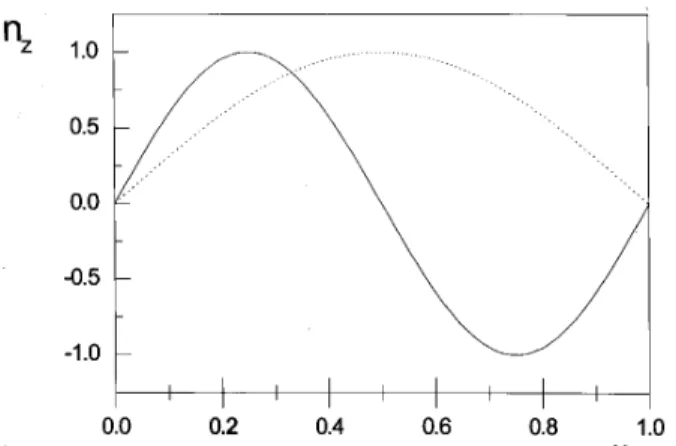
Figure2. Proleofthediretoralongthe~ezdiretion. Due
the boundaryonditionthe bendingof thediretor atthe
edges of the sample is null, and it ahieves itsmaximum
inlinationattheenterofthesample. Alongthe~ez
dire-tiontheproleoftheoutofplane tiltwillbegivenbythe
derivativeofthisfuntion. So,asthisfuntionisevenwith
respettotheaxisz=d=1=2,theoutofplanewill beodd
withrespettothisaxis(seeFig. 4).
Figure3. Outline ofdiretoralongthe~ex diretion atthe
enterorthesample. Thisproleisdesribedbytheellipti
funtion, sn(x;k), givenonEq. (8). Observethat the
es-sentialdierenebetweenthisfuntionandtheusualsin(x)
is that the sn(x;k), presents a saturation region given in
thisgureby. Thisparameterdeterminedbythe
modu-lusk oftheelliptisn(x;k). Whengoestozero sn(x;k)
beomessin(x)[14 ℄.
In the derivation of the above equation it has
as-sumed that the walls are one-dimensional planar
ob-jets(Itanbeshownthatitsperiodiityresultsfrom
itsone-dimensionalityandvie-versa[17℄). Butit was
not presented any argument that an justify this
the internal motion of the nemati material. It was
onjetured byGuyonet al. [3℄, anddemonstrated by
Lonbergetal. [5℄, thattheelastipropertiesofthe
ne-matimedium arenotenoughto explaintheobserved
wallsgeometry. Thenematimaterialisananisotropi
liquidand, atthemomentofthewallsreation,its
in-ternal rearrangement must be taken in aount. The
diretorrotationstimulates themotionofthenemati
material and it is this internal motion that gives rise
to theone-dimensional(andperiodi)haraterof the
walls[17℄. Infat, using theNLC anisotropi
proper-ties, it was shown that the observed geometry of the
wallsresultsfromaoherentinternalmotionofthe
ne-mati material. That is, the external magneti eld
reates an unstable situation that must beeliminated
as fast as possible. This implies that the motion of
the nemati materialneeds toourwith thesmallest
possible eetivevisosity. In the searh for the least
eetive visositythesystemseletstheobserved
one-dimensional andtheperiodigeometry.
However,assoonasthismotioneases,theresulting
one-dimensional walls'onguration is not found in a
minimumoftheelastifreeenergy,butin aloal
max-imum. This fat leadsto the fate of these strutures:
utuations arising at the nodes of the walls destroy
their regularityleading then to losed elliptial
stru-tures[18℄. Animportantissueabouttheseutuations
isthatalongtheirstudyithasbeenassumedthatthey
arerestritedtotheplaneofthewalls,and
perpendi-ular utuations havenotbeen onsidered. Ahead, it
will be shown that suh out-of-planeutuationslead
the diretor eld to an esape into the third
dimen-sion. The orrelationbetweenthis esapeto thethird
dimensionandthefate ofthewallswill notbe
onsid-eredhere. Somereasonsforthisproedurewillbegiven
at theonlusion.
Observethatallthisdynamialphenomenology,and
the Freederiksz transition, is indued by the linear
term of the expansion determining the onguration
given by Eq. (8). The higher order terms of this
ex-pansiondeterminethenewstableonguration,butare
notsigniantinthedynamialproessgivingthe
one-dimensional and periodi harater of the walls. This
observation will be important in the analysis of how
the esape to the third dimension hanges the planar
onguration,tobegivenbelowinEq. (42).
The approah to be developed below is not
re-strited to the magneti walls, but is to be applied
toeveryone-dimensionalplanartextureswhoseenergy,
andthereforetheompletephysialharaterization,is
givenbythevaluesoftheparameters
(x;y;z);
x
;
z
(9)
ateahpointofthesample. Ifitissupposedthatthey
are stableongurations,theutuationsofthe
dire-tor indiretion~e
z
,givenbyanyoneoftheterms
n
z
;
x n
z
;
z n
z
; (10)
mustassume,inthemean,anullvalue. Ifautuation
indues a non-null value for some of these terms the
orrespondingplanarongurationwouldbeunstable.
Attheend ofthisworkit willbeshownthatprovided
x
and
z
arenon-nullstheesapeintothethird
di-mensionwillalwaysexist.
Inordertoimplementthistaskthediretor's
ong-urationwillbedesribedbytheylindrialoordinates
n
x
=ros(x;y;z); n
y
=rsin(x;y;z); n 2
z =1 r
2
;
(11)
where r = r(x;y;z) is thelength of theprojetion of
thediretorintheplane(x;y),and(x;y;z)isthe
an-glebetweenthisprojetionandthe~e
x
diretion. Inthis
parametrizationaplanaronguration,Eq. (2),would
be obtainedwhen n
z
=0,or r 2
=1,everywhere. So,
anon-nullvalueofn
z
wouldimplytheexisteneofthe
out-of-plane tilt. Furthermore, observe that the
rela-tionxingthediretor'slength,n 2
x +n
2
y +n
2
z
=1;is
triv-iallysatised and, due to this relation, there are only
twoindependentparameterxingthediretoreld. In
thisworkwewilluseand n
z
. Observethat rannot
be used, beause it does not determine n
z
uniquely.
Nevertheless, wewill ontinue touse, for onveniene,
thenotationn
x , n
y ,n
z
,andr:Butitannotbeforgot
that these diretor's omponents aren't independent,
butonnetedbythenormalizationofthediretor.
Toobtaintheequationsdrivingtheesapeintothe
thirddimensionletusbeginbyrewritingtheFrankfree
energy,Eq. (1),in thefollowingform
F =
Z
V dV
1
2 K
11 (
x n
x +
y n
y +
z n
z )
2
+ 1
2 K
33 r
2
x +r
2
y +r
2
z
+ 1
2 ( K
22 K
33 )(n
x r
x +n
y r
y +n
z r
z )
2
; (12)
whereitwasusedthefat that
n 2
x +n
2
y +n
2
z
=1; (13)
and
r
x =
y n
z
z n
y ; r
y =
z n
x
x n
z ; r
z =
x n
y
y n
x :
(14)
Wemakeuseof Eq. (4) andEq. (11)andobserve
that
z r=
n
z
r
z n
z
and
x r=
n
z
r
x n
z
; (15)
fromwhih itfollowsthat
x n
x =
n
x n
z
r 2
x n
z n
y
x
z n
x =
n
x n
z
r 2
z n
z n
y
z
(16)
x n
y =
n
y n
z
r 2
x n
z +n
x
x
z n
y =
n
y n
z
2
z n
z +n
x
and r x = n y n z r 2 z n z n x z r y = n x n z r 2 z n z +n y z x n z (17) r z = n y n z r 2 x n z +n x x
Puttingthese resultsin thebulkfreeenergy,Eq. (12),
itisobtained
F =F
o +F 1 +F 2 +F 3 +F 12 ; (18) where F o = 1 2 Z V dV (K 11 n 2 y +K 33 n 2 x )( x ) 2 + 1 2 K 22 ( z ) 2 1 2 a H 2 n 2 y (19) F 1 = Z V 1 2 K 11 +K 33 n 2 z r 4
(1+n 2 z ) ( z n z ) 2 [K 11 n y ( x )℄( z n z )
dV; (20)
(21) F 2 = Z V 1 2 K 22 n 2 z +K 33 n 2 x +n 2 z + n 2 z n 2 z r 4 +(K 22 K 33 ) n 2 z n 2 z r 2 1 r 2 +2 ( x n z ) 2 + + 1 2 h 2K 22 n y ( z )+K
33 2 n x n y n z r 2 ( x )+2n
2 z n y ( z ) + (22) + 2(K 33 K 22 )n y n x n 2 z r 2 ( x )+ n 2 z r 2 ( z ) n x n y n z ( x ) ( x n z ) dV; F 3 = Z V 1 2 K 33 ( z ) 2 +(K 33 K 22 )n 2 x ( x ) 2 n 2 z + + 1 2 [(K 33 K 22 )n x ( z )( x )℄n z dV; (23) F 12 = 2K 33 n x n z r 2 ( z n z )( x n z ) (24) d
It is important to observe that in the rst term,
F 0 , n x and n y
are onneted to n
z
throughEq. (13).
Therefore, an out-of-planetiltwill hange F
0
.
Never-theless,F
0
istheuniqueterminEq. (18)thatsurvives
in the limitof theplanar onguration. Furthermore,
theremaindertermsompletelydesribethedynamis
oftheparametersestablishedin Eq. (10). So,they
a-ount fortheesapeinto thethird dimension through
the iteration of n
z
, orits variations, with the texture
inthe(x;y)plane. Consequently,itisonlyinthis
on-dition that theontributionsof theterms of Eq. (10)
willemerge.
III Theorigin of theout-of-plane
tilt
Inthis setionwewill look fortheoriginof thefores
that push the diretor to the third dimension. As it
seemsimpossibletondanexatsolutionouplingall
dimensionalplanarongurationisunstableby
assum-ing that all the elasti energy of the one-dimensional
planartexturesisontainedinthetermF
o
ofEq. (18).
Ouraimis toshownthat, in ordertorelax theenergy
storedinF
o
,thediretorinlinetothe~e
z
diretionand
othersenergytermsbeomesnon-null.
So,assumingthatthereisaone-dimensionalplanar
ongurationinthesample,letusonsider the
out-of-plane random utuations ating overit. As we have
statedinEq. (10),iftheongurationisstablewemust
obtainhn
z
i=0,h
x n
z
i=0,h
z n
z
i=0,wherehn
z i
in-diatesthemeanvalueoftherandomutuationsofthe
variablen
z
,andsonon. Inordertoappreiatethe
de-velopmentofeahofthese utuationswewill assume
thatneartheequilibriumthemeanvalueisgovernedby
the samelaws of the orrespondingmarosopi
equi-libriumvariables,[25-28℄.Therefore,themeanvalueof
the variables desribed above ould be alulated
us-ingthelawsofmotiongivingtheminimumofEq. (18).
utu-arately. So, during theevaluation of agiventerm the
meanvalueoftheothersoneswillbesupposedzero. As
wewillseeimmediatelythishypothesisisuntenable: at
theenditresultsthat themeanvalueofallthese
vari-ables is non-null. This is a onvenient ontradition:
theonlywaytoavoiditistoadmittheexisteneofthe
out-of-plane tilt, just what we want to prove. In the
nextsetiontheombinedationofthesetermswillbe
studied.
Tobegin,onsider
F =F
o +F
3
(25)
where F
o
ontains the energy of the textures in the
(x;y) plane and F
3
ontains the energy stored in the
onguration n
z
. As we have negleted the terms
z n
z and
x n
z
theenergyF
3
isanalogoustoa
\poten-tial energy"for n
z
: Byassuming that F
o
will ontain
the main ontribution to the energy of the observed
textures, the term F
3
will be onsidered as a
pertur-bation and we will negleted its inuene on F
o . So,
the minimum of F
3
is obtained for utuationsof n
z
around
hn
z i
(K
22 K
33 )n
x (
z )(
x )
2(K
33 (
z )
2
+(K
22 K
33 )n
2
x (
x )
2
) : (26)
Therefore,if
z
6=0and
x
6=0,weobtainhn
z i6=0,
and the planarongurationwould be neessarily
un-stable. Thatis,onlywhen
x or
z
arenullwewould
obtain hn
z
i = 0! As, aording to Eq. (9) and Eq.
(18), theplanar texture is given by the valuesof
x
and
z
, the nullity of these parametersis equivalent
to theabsene oftheplanartexture. Furthermore,n
z
wouldbeproportionalto
z
. Thisisansurprising
re-sult beause,asweseein theEq. (18),the funtion
is symmetriinrelationto theplanegivenbyz =d=2
and, therefore,
z
would be anti-symmetri with
re-spet tothis plane. Consequently,if in theupperhalf
(z >d=2)ofthe samplethediretortiltsto the
dire-tion of inreasing z, in the lower half of this plane it
would tilts to the diretion of dereasing z. Due the
symmetryof the nemati material (~n is equivalent
to ~n),themajorobservableonsequeneofthis
anti-symmetrywouldbethefat that attheplanez=d=2
theout-of-planetiltwouldbenull.
Let us onsider now the development of the mean
valueofthetermh
z n
z
i. Itsisgivenby
F =F
o +F
1
: (27)
Inexatlythesamewaythatwehavedonetoarriveat
Eq. (27),ifK
11
6=0;weget
h
z n
z in
y
x
: (28)
Finallyweonsider
F =F
o +F
2
: (29)
andobtain
h
x n
z i
K
22 n
y (
z )
n 2
x K
33
: (30)
Observethat inthese equationsthetermimpelling
theutuations ofhn
z i, h
z n
z
iand h
x n
z i is
x and
z
. Thereforeinorderto obtainhn
z
i=0,h
z n
z i=0
and h
x n
z
i=0 onemust have
x
=0 and
z =0.
So,again, theexisteneof thenon-nullplanartexture
drivestheout-of-planetilt.
DuringthededutionoftheEqs. (26),(28)and(30)
themeanvalueofeahofthetermsn
z ,
x n
z and
z n
z
hasbeensupposedinitiallyzero. Thishypothesishasat
leasttwoadvantages. Firstly, itgivesaglimpseof the
out-of-planetiltby negletingtheinteration between
theseutuationsandsupposingthattheareverylose
oftheplanaronguration. Seondly,itleadstoa
on-tradition, beause the nal result is that these
vari-ablesarenotnull. Assaidabovetheonlywaytoavoid
thisontraditionintoassumetheout-of-planetilt.
IV A small bending solution
In the last setion we have shown that the
one-dimensionalongurationgivesanon-nullvaluetothe
meanofeah ofthe parametersofEq. (18). But,our
dedutiondoesnotonsidertheinterationbetweenthe
parametersdesribedbythatequation. Inordertotake
intoaountthisinterationwewillpresentan
approx-imatedanalytisolution.
The esape into the third dimension will be
on-sideredasaweakphenomenon(ofoursethismustbe
onrmedby our nal results) that allowus to retain
onlyitslinearand quadratiterms (inn
z ,
z n
z ,
x n
z
andtheirproduts). Furthermore,wewillusetheusual
approximationK
11 =K
33
,thatproduesanimportant
simpliationinF
o
withouthangingsubstantiallythe
remainderterms of Eq. (18). Under these onditions
weobtain
F=F
o +F
1 +F
2 +F
3 +F
12
; (31)
where
F
o
= 1
2 Z
dV
K
33 r
2
(
x )
2
+ 1
2 K
22 (
z )
2 1
2
a H
2
n 2
y
F 1 = Z V 1 2 K 11 ( z n z ) 2 K 11 n y ( x )( z n z ) dV; (33) F 2 = Z V 1 2 K 33 n 2 x ( x n z ) 2 + + K 22 n y ( z ) K 33 n x n y n z ( x
)+(K
33 K 22 )n x n 2 y n z ( x ) ( x n z
) dV; (34)
F 3 = Z V 1 2 K 33 ( z ) 2 +(K 33 K 22 )n 2 x ( x ) 2 n 2 z + + 1 2 [(K 33 K 22 )n x ( z )( x )℄n z
dV: (35)
Inthenextstepweobservethatn
x andn
y
,asdenedin Eqs. (11),makesEq. (31)highlynon-linear. Inorder
toonsiderthis pointweonsiderthat
n x =r(1 2 2
+::::); n
y =r(
3
6
+::::) (36)
andthat n 2 x =r 2 (1 2 + 4 4
+::::); n 2 y =r 2 ( 2 4 3
+::::): (37)
Inthefollowingalulationsonlythetermoffourthorderin anditsderivatives(orprodutsbetweenboth)will
beretained. Furthermore,wereallthat r 2
=1 n 2
z
anduseinadvanetheresultofEq. (43),that showsthatn
z
isquadratiin anditsderivatives. Therefore,bykeepingtheforth ordertermin wearebeingonsistentwith
thesmallbending approximationusedin Eq. (32)to Eq. (35). Withthese approximationswehave
F o = Z V dV 1 2 K 33 ( x ) 2 + 1 2 K 22 ( z ) 2 1 2 a H 2 ( 2 4 3 ) (38) F 1 = K 33 Z V 1 2 ( z n z ) 2 ( x )( z n z ) dV; (39) F 2 = Z V 1 2 K 33 ( x n z ) 2 +K 22 ( z )( x n z )
dV; (40)
F 3 = Z V 1 2 (K 33 K 22 )( z )( x )n z
dV: (41)
NowtheEuler-Lagrangeequationfor is
K 33 2 x K 22 2 z a H 2 ( 2 3 3 )+ +(K 33 K 22 ) ( x z n z ) 1 2 ( x (n z z )+ z (n z x ))
=0; (42)
andtheequationforn
z is K 33 2 z n z + 2 x n z +(K 33 K 22 ) 3 2 ( z )( x )+( x z )
=0 (43)
d
As observed above, Eq. (43) shows that n
z is of
seondorder in. Therefore,thehangein theplanar
texture due to theout-of-plane tilt,givenin Eq. (42)
isofthirdorderin. Moreover,werememberthatthe
bending of the diretor at the Freederikszthreshold,
bytherstordertermofthisequation[1℄. Thefuntion
ofthird ordertermis tostabilizethenewleast energy
onguration, and it will not hange the fundamental
walls'harateristis: one-dimensionalityand
(x;y;z)=
0 sin
2
x
sin
z
d
; (44)
Of ourse sin(2x=) is an approximation to the
sn(x;k) , givenin Eq. (8) andFig. 3,that preserves
itsfundamentalproperty: periodiity. Asanbeeasily
veried,when Eq. (44)issubstituted in Eq. (43),the
solutionforn
z
beomes
n
z =
d
2
0 5(K
22 K
33 )
16K
33 1+(
2d
)
2
sin
4
x
sin
2
d z
:
(45)
From this equation we see that, aording to the
ap-proximationthatweareusing,theout-of-planetiltonly
exists if K
33 6= K
22
. Furthermore, it is really
anti-symmetri with relation to theplane z =d=2. In the
Fig. 4 it is shown a prole along the ~e
z
diretion of
the diretor given by Eq. (7), or (44), and the
pre-dited out-of-plane tilt given by the above equation.
Another important result is that the out-of-plane tilt
is proportionalto d=. Thismeans that,withthe use
of samplesforwhih d<<,itwouldbeaverysmall
eet. Finally,observethat alongthe~e
x
diretion the
phenomenon is null exatlyatthe walls'nodes andat
pointswherethewallsahievetheirmaximumbending.
Figure4. Proleoftheout-of-planetiltalongthe~ez
dire-tion. Thisfuntionis givenbythe derivative ofthe
dire-tor prolealongthis diretion. So, theout-of-planetilt is
oddwith respettothe axis z=d=1=2, being null atthis
point. Thedashedlinerepresentsthediretorproleshown
inFig.2.
V Final remarks and onlusion
Wehaveonsideredtheoriginoftheout-of-planetiltby
studying thetrends oftheutuations ofhn
z i,h
z n
z i
and h
x n
z
i. But, itis widelyknown that in the
mag-neti walls there are important in-plane utuations
and, it is believed, these utuations are the
respon-sible for thefate of the walls [18℄. Fromthis piture,
andonsideringtheresultsexposedalongthispaper,it
anbeasked: istheestablished piture-of the
insta-bility of the walls - hanged by the out-of-plane
u-be done in this problem, but it seems that these two
kindsof utuationshaveompletelydierentrolesin
thephysisofthemagnetiwalls. Inapreviouswork,
it has been shown how the fate of the walls is drove
by largein-plane utuations happening at the plaes
where, even in the presene of the external magneti
eld, the diretor does not bend at all. These plaes
form the nodes of the walls. But, Fig. 5 shows that
just at the nodes of the walls the out-of-plane tilt is
zero. Therefore it seemsthat the twokinds of
utu-ations have its ation at dierent plaes of the walls,
anditsinterationouldbenegleted. Furthermore,to
ndan approximatedsolution, we used asmall
bend-ingapproahwhere the planarongurationhasbeen
onsideredasthepredominantenergyterm.
Figure5. Proleoftheout-of-planetiltalongthe~ex
dire-tion.Thisfuntionisgivenbythederivativeofthediretor
prolealongthis diretion. In thedashedline it isshown
thediretorprolegivenbythe funtionsin(2x=).
Ob-servethat thisfuntionis notexatlysamepresent inFig.
3. Inthat gureitwas plottedthe funtionsn(x;k),that
presentsasaturatedregion. Inordertosimplifythe
alu-lationsthatfuntionwasapproahedbysin(2x=).
Asanal remark,werememberthat in aprevious
numerialstudy it hasbeenpreditedthat the
out-of-planetiltwouldonlyourabovearitialpoint[7,8℄.
Inour analytialstudy we havenot foundit. We
be-lieve that this dierene omes from the fat that in
thatnumerialstudyithasbeenassumedaneven
fun-tion,withrelationto z=d=2,fortheout-of-planetilt
and,aswehaveantiipatedinEq. (26)anddeduedin
Eq. (45),thisisindeed andoddfuntion.
Aknowledgments
Thisworkwassupported bytheBrazilian agenies
CNPqandArauaria.
Referenes
[2℄ F.Brohard,J.Phys.(Paris),33,607(1972).
[3℄ E. Guyon, R. Meyer, and J. Salan. Mol. Cryst. Liq.
Cryst.54,261(1979).
[4℄ J. Charvolin, and Y. Hendrix, J. Phys. (Paris) Lett.
41,597(1980).
[5℄ F. Lonberg, S. Fraden, A.J. Hurd, and R.B. Meyer,
Phys.Rev.Lett.52,1903 (1984).
[6℄ G.Srajer,S.Fraden,andR.Meyer,Phys.Rev.A39,9
4828(1989).
[7℄ M.Grigutsh,N.Klopper,H.Shmiedel,andR.
Stan-narius,Mol.Cryst.Liq.Cryst.261,283-292(1995).
[8℄ M.Grigutsh,N.Klopper,H.Shmiedel,andR.
Stan-narius,Phys.Rev.E49,5452(1994).
[9℄ P.E.Cladis,M.Kleman,J.dePhysique33,591(1972).
[10℄ R.B.Meyer,Phyl.Mag.27,405(1973).
[11℄ M.Kleman,DefetsinLiquidCrystals,inAdvanesin
LiquidCrystals.EditedbyGlennH.Brown,Aademi
Press,NewYork1975.
[12℄ G.Vertogen,W.H.deJeu,ThermotropiLiquid
Crys-tals, Fundamentals. Springer-Verlag, Berlin,
Heidel-berg,1988.
[13℄ F.C.Frank,DisussionsFaradaySo.25,19(1958).
[14℄ A.J. Palangana, M. Sim~oes, L.R. Evangelista,and A.
A.Arroteia,Phys.Rev.E56,4282(1997).
[15℄ M. Sim~oes, A.J. Palangana, and L.R. Evangelista,
Phys.Rev.E54,3765 (1996).
[16℄ M.Sim~oes,Phys.Rev.E54,6952(1996).
[17℄ M.Sim~oes,Phys.Rev.E56,3061(1997).
[18℄ M. Sim~oes,A.J.Palangana,and F.C.Cardoso,Phys.
Rev.E58,323(1998).
[19℄ M. Sim~oes, A. J. Palangana, and L.R. Evangelista,
Phys.Rev.E56,7326 (1997).
[20℄ M. Sim~oes and A.A. Arroteia, Phys. Rev.E 59, 556
(1999).
[21℄ P.A. Santoro, A.J. Palangana, and M. Sim~oes, Phys.
Lett.A243,71(1998).
[22℄ M. Sim~oes, A.J. Palangana, and L.R. Evangelista,
Braz.J.Phys.28,348(1998).
[23℄ P.F.ByrdandM.D.Friedman,HandbookofEllipti
In-tegralsfor EngineersandPhysiists,(Springer-Verlag,
Berlin,1954).
[24℄ W.H. de Jeu, Physial properties of liquid rystalline
materials, (Gordon and Breah, Siene Publishers,
1979).
[25℄ L.Onsager,Phys.Rev.37,405(1931).
[26℄ L.Onsager,Phys.Rev.38,2265(1931).
[27℄ D. Chandler, Introdution to modern statistial
me-hanis,(Oxford University Press, New York, 1987)
Chap.8.
[28℄ Hydrodynami Flutuations, Broken Symmetry, and
CorrelationFuntions. Frontiers inPhysis.The