w w w . r e u m a t o l o g i a . c o m . b r
REVISTA
BRASILEIRA
DE
REUMATOLOGIA
Original
article
Development
of
rheumatology
training
in
Brazil:
the
option
for
a
medical
residency
program
夽
Cleandro
Pires
Albuquerque
∗,
Leopoldo
Luiz
dos
Santos-Neto
UniversidadedeBrasília(UnB),Brasília,DF,Brazil
a
r
t
i
c
l
e
i
n
f
o
Articlehistory:
Received18November2015 Accepted9March2016 Availableonline29April2016
Keywords:
Rheumatology Medicalresidency Specialization
Professionalqualification
a
b
s
t
r
a
c
t
Objective:Todescribethecharacteristicsandprogressionofthesupplyofnew rheumatolo-gistsinBrazil,from2000to2015.
Methods:Consultationstodatabasesandofficialdocumentsofinstitutionsrelatedto train-ing andcertification ofrheumatologistsinBrazil tookplace. Thedata werecompared, summarizedandpresenteddescriptively.
Results:From2000to2015,Brazilqualified1091physiciansasrheumatologists,ofwhich 76.9%(n=839)completedamedicalresidencyprograminrheumatology(MRPR);theothers (n=252)achievedthistitlewithoutMRPRtraining.TherewasanexpansionofMRPR pos-itions.Atthesametime,therewasachangeintheprofileofthenewlyqualifieddoctors. Earlyintheseries,thefractionofnewrheumatologistswithoutMRPR,enteringthemarket annually,wasapproaching50%,droppingtoabout15%inrecentyears.In2015,Braziloffered 49MRPRaccreditedprograms,with120positionsperyearforaccess.Therewasan imbal-anceinthedistributionofMRPRpositionsacrossthecountry,withastrongconcentrationin thesoutheastregion,whichin2015held59.2%ofthepositions.Publicinstitutionsaccounted for94%(n=789)ofgraduatesinMRPRduringthestudyperiod,whilestillmaintaining93.3% (n=112)ofseatsforadmissionin2015.
Conclusions: Inthelastsixteenyears,inparallelwiththeexpansionofplacesofaccess,MRPR hasestablisheditselfasthepreferredrouteforrheumatologytraininginBrazil,mainly supportedbypublicfunds.RegionalinequalitiesintheprovisionofMRPRpositionsstill persist,aschallengesthatmustbefaced.
©2016PublishedbyElsevierEditoraLtda.ThisisanopenaccessarticleundertheCC BY-NC-NDlicense(http://creativecommons.org/licenses/by-nc-nd/4.0/).
夽
StudyconductedinHospitalUniversitáriodeBrasília,UniversidadedeBrasília(UnB),Brasília,DF,Brazil.
∗ Correspondingauthor.
E-mail:[email protected](C.P.Albuquerque).
http://dx.doi.org/10.1016/j.rbre.2016.04.001
Evoluc¸ão
da
formac¸ão
de
reumatologistas
no
Brasil:
a
opc¸ão
pela
residência
médica
Palavras-chave:
Reumatologia Residênciamédica Especializac¸ão Formac¸ãoprofissional
r
e
s
u
m
o
Objetivo: Descreverascaracterísticaseaevoluc¸ãodaofertadenovosreumatologistasno Brasil,de2000a2015.
Métodos:Fizeram-seconsultasabasesdedadoseadocumentosoficiaisdeinstituic¸ões rela-cionadasàformac¸ãoeàcertificac¸ãodereumatologistasnopaís.Osdadosforamcruzados, sumarizadoseapresentadosdeformadescritiva.
Resultados: De2000até2015,oBrasilhabilitou1.091médicosàcondic¸ão de reumatol-ogistas,dentreos quais76,9%(n=839)concluíram residênciamédicaem reumatologia (RMR);osdemais(n=252)obtiveramotítulosemcursarRMR.Houveexpansãodasvagasde RMR.Paralelamente,ocorreuumamodificac¸ãonoperfildosrecém-habilitados.Noinícioda série,afrac¸ãodenovosreumatologistassemRMR,ingressantesnomercadoanualmente, aproximava-sedos50%,reduziu-separacercade15%,emanosrecentes.Em2015,havia nopaís49programasdeRMRcredenciados,com120vagasanuaisdeacesso.Observou-se desequilíbrionadistribuic¸ãodevagasdeRMRpelopaís,comforteconcentrac¸ãonaRegião Sudeste,queem2015detinha59,2%dasvagas.Instituic¸õespúblicasresponderampor94% (n=789)dosconcluintesdeRMRnoperíodoestudado,mantiveramainda93,3%(n=112)das vagasparaingressoem2015.
Conclusões: Nosúltimos16anos,paralelamenteàexpansãodasvagasdeacesso,aRMR consolidou-secomoviapreferencialparaformac¸ãoemreumatologianoBrasil, eminente-mentesuportadaporrecursospúblicos.DesigualdadesregionaisnaofertadevagasdeRMR persistemcomodesafiosaseremenfrentados.
©2016PublicadoporElsevierEditoraLtda.Este ´eumartigoOpenAccesssobuma licenc¸aCCBY-NC-ND(http://creativecommons.org/licenses/by-nc-nd/4.0/).
Introduction
Amedicalresidencyisaformofpostgraduateeducationlatu sensu for physicians, in the form of specialization course, characterizedbyin-servicetraining.1 Thefirst medical
res-idency programs (MRP) in Brazil, known at the time as boardingprograms,beganin1944attheHospitaldas Clin-icas, the University of São Paulo.2 In 1977, the Comissão
NacionaldeResidênciaMédica(NationalCommissionon Med-icalResidency)(CNRM)wascreated;thisinstitutionexercises regulatoryfunctions,monitoringandevaluationofMRPs,and itscompositionandcompetencieshaverecentlybeen rede-fined by Decree No. 7562 of 2011.3,4 Since the 1940s, the
numberofMRPsandmedicalresidencypositionsinthe coun-try grew progressively. However, there is little information availableon the characteristics ofthat growth.5 With
spe-cificregardtomedicalresidencyprogramsinRheumatology (MRPR)inBrazil,publicationsarescarce.6–8
Amedicalresidencyisalong-standingformforsupervised insertionofphysicianstoprofessionallife,andtoqualifythese individualstothespecialty.2ThecompletionofMRPconfers
legallytheSpecialistTitle(ST)inthearea.1However,thereis
anotherwayfortheformalqualificationofmedicalspecialty inBrazil,basedonanagreementbetweentheFederalCouncil ofMedicine(FCM),BrazilianMedicalAssociation(BMA)and CNRM.9Thisagreementprovidesforthegrantingoftitlesby
MRPsaccreditedbyCNRM,butalsobymedicalspecialty soci-etiesaffiliatedtoBMAbyweightofevidence.
TheBrazilianSocietyforRheumatology(SBR),affiliatedto BMA,conductsanannualexamofsufficiencytoobtainST.
In2015,physicianswithMRPR certificateorwitha special-izationcourseinRheumatologyaccreditedbytheMinistryof Education,withaminimumdurationof24monthswereable toenrollintheexamination,subjecttothefollowing prereq-uisite:theapplicantshouldhavecompletedhis/her24-month residencyprogramorexpertisecourseininternalmedicine. PhysicianswithoutMRPRoraspecializationcourse,butable toprovideevidenceofprofessionalactivityformorethanfour years,withregularparticipationinscientificeventsinthe spe-cialtyandhavingaccumulatedatleast100pointsintheBMA accreditationsystem,werealsoadmitted.10,11
Atthetimeofthisstudy,wecouldnotfindarticles pub-lishedspecificallyonrheumatologisttraininginthiscountry, coveringbothaccreditationwaystothisspecialty.However, suchinformationisrelevanttotheproperformulation and evaluationofhumanresourcetrainingpoliciesin Rheumato-logy,whetheringovernmentoracademicsphere.Thisstudy aimedtodescribethecharacteristicsanddevelopmentofnew rheumatologistsinBrazil,from2000to2015.
Material
and
methods
Thevariablesofinterestofthisstudy,withtheir respec-tivedatasources, are described below.Thenominal list of approvedphysiciansintheannualsufficiencyexamstoobtain theSTofthisSocietywasobtainedfromSBR.FromCNRM,we obtainedthe numberofaccreditedplacesforaccesstothe firstyearofMRPR,thenumberofnewcertificatesissuedto physicianswhocompletedMRPR,andthenominallistofall graduatesinMRPRperyear,perunitoftheFederation(UF) andperinstitution.12,13FromtheinstitutionsofferingMRPin
Rheumatologythroughpublicnoticesofselectionprocesses, weobtainedthenumberofMRPRaccesspositionseffectively availableannually.
In addition, for purposes of confrontation and cross-checkingofinformation,weconsultedtheminutesofregular and extraordinary meetings, as well as summaries and extracts of authorization acts of CNRM available on the websiteofthecommittee.14 Theyears2000and 2001were
specificallyexcludedfromthetimeseriesofanumberof pos-itionsandofMRPofRheumatology,duetouncertaintiesin thesedata.Thetimeseriesofother variablesincludethose twoyears.ThelistofnamesofgraduatesinMRPRperyear, UFandinstitution,obtainedfromtheCNRMsystem,wasnot restrictedtothespecificperiodofinterestforthisstudy,but wasextractedinitsentirety,fromtheearliestrecords(dating fromtheendofthe1970s)totheyear2015,inordertomeet theinstrumentalneedsdescribedbelow.
Toobtaintheannualnumberofnewrheumatologists with-outaMRPRcertificate,wecarriedoutacrossingofthedata ofthenominallistofthosephysiciansapprovedintheSBR’s annualexaminationintheperiod2000–2015againsttheentire CNRMdatabase,regardlessofanytimelimit,with identifica-tionofindividualswhopassedintheSTexamwhoneverhada registeredcertificateofMRPRatanytime.Thenumberof gra-duatesinMRPRinagivenyearwasrecordedfromthenumber ofnewcertificatesofcompletionofMRPRissuedinthatyear. Thetotalofnewrheumatologistsperyearwascalculatedby addingthenumberofgraduatesofMRPRwiththenumberof graduatesbySBRnotholdersofanMRPRcertificate.
ThoseapprovedintheSBRexamuntiltheyear2003that alsoattendedMRPRwereincludedinthecountingofnew spe-cialistsonlyintheyearofcompletionofresidency,sincetill theyear2003residentstooktheSTexaminationinthe begin-ningofthesecondyearofMRPR.Forclarity,thesecaseswere notincluded inthe annualcountsofSTwithoutMRPR.All allusionstoMRPRpositionsinthisstudyrelateonlytoplaces ofaccesstothefirstyear(R1)inthespecialty.Accordingly,all referencestocertificatesissuedortograduatesinMRPRare relatedonlytotheminimumcycleof24monthsofresidence, beingdisregardedtheoptionalyears.
Thedatausedinthisresearchcanbeaccessedonline, com-ingfromadministrativedatabases.Nointervention,follow-up orinformationgatheringwasdoneonanindividualor popula-tionbasis.Thesurveydidnotincludeclinical-epidemiological orbiologicalvariables,asitfocusedonthestudy ofhuman resourcetraininginRheumatology,basedonsecondary infor-mation sources. Thus, the protocol was not submitted to theethicscommitteeinbiomedicalresearch,deemed unen-forceableinthiscontext.Thisstudydidnotincludepediatric rheumatologists.Allconsultationswereheldinthe2013–2015 period.Dataweresummarizedandpresenteddescriptively.
140 MRPR positions
MRPR programs 120
100
80
60 55
63 64 66 69 73
73 75 78 79
88 99
110 120
49 49 47 43 40 40 40 40 40 40 38 37 37 31 40
20
0
2003
2002 2004 2005 2006 2007 2008 2009 2010 2011 2012 2013 2014 2015 Year
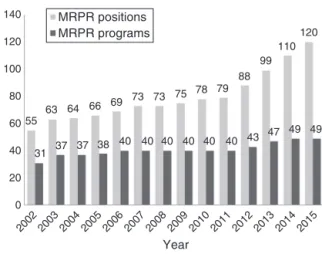
Fig.1–Numberofprogramsandmedicalresidency
programpositionsinrheumatology(MRPR)inBrazil,
2002–2015.
Results
From2000to2015,therewere839graduatesinMRPRinBrazil. In the same period, SBR granted 884 new specialist titles, amongwhich252wereawardedtophysicianswithoutMRPR. Onthewhole,withtheadditionofthegraduateswithMRPR withthosegraduatedwithoutanMRPR,1091physicianshave beeninvestedintheconditionofnewrheumatologistsinthe country.Ageneralratio of3.3was foundfornew rheuma-tologistswithMRPRversuseachnewrheumatologistwithout MRPRqualifiedintheperiod.
TherewasaprogressiveincreaseinthenumberofMRPRs, ofaccreditedpositionsofMRPR,ofMRPRgraduates,andinthe totalofnewrheumatologistsperyear(Figs.1and2A).In2015,
110 Total of rheumatologists
STs without MRPR Total of STs
Graduates in MRPR
100 90 80 70 60 50
A
B
30 20New
rheumatologists
STs-SBR granted 10
0
80 70 60 50 40 40
30 20 10 0
2000 2001 2002 2003 2004 2005 2006 2007 2008 2009 2010 2011 2012 2013 2014 2015
Year
Fig.2–(A)Numberofnewrheumatologistsqualifiedper
yearinBrazil,intotalandwithmedicalresidencyin
rheumatology(MRPR);(B)numberofspecialisttitles(STs)
certifiedbytheBrazilianSocietyofRheumatology(SBR)per
103newrheumatologistswerequalified,amongwhich86had completedtheirMRPR.ThenumberofSTsannuallyqualified bySBRshowedadownwardtrendinthefirstfiveyearsofthe series,withsubsequentrecovery,butneverexceedingthe ini-tiallevels(Fig.2B).ThenumberofSTsspecificallygrantedto physicianswithoutMRPRshowedaninitialdecline,stabilizing later,butsincethenwithoutaconsistentrecovery(Fig.2B).In 2015,68STswereissuedbySBR,amongwhich17for physi-cianswithoutMRPR.Theannualfractionofnewspecialists withoutMRPRconsistentlydecreased,reachingthelowest lev-elsintheyears2013and2014(Fig.3).
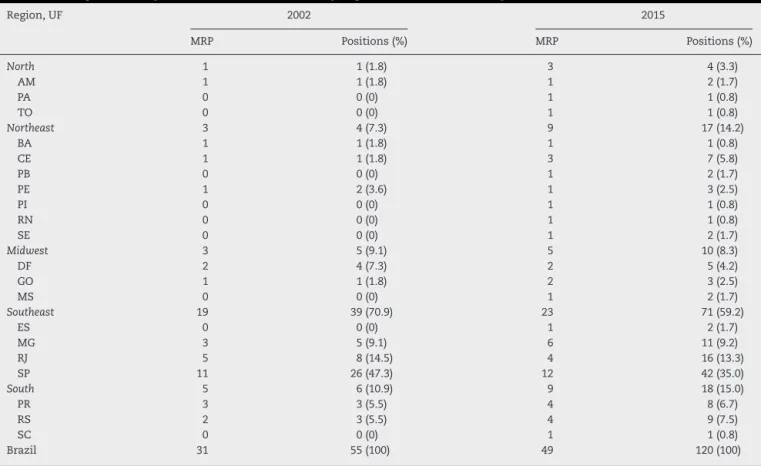
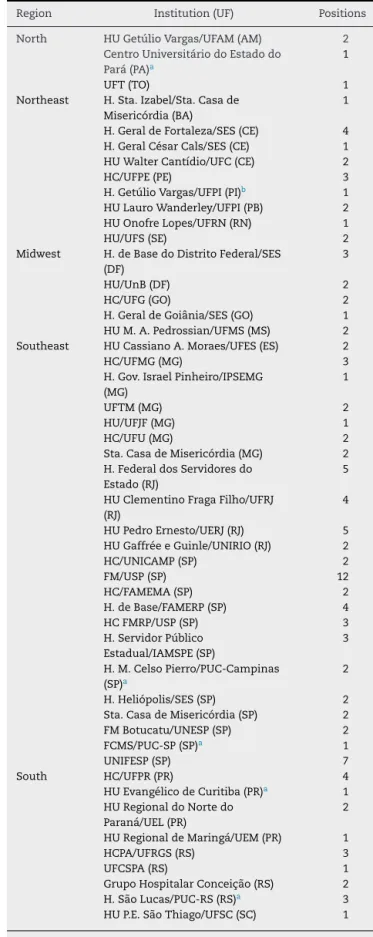
WeobservedheterogeneityinthedistributionofMRPR pro-gramsandpositionsamongtheregionsofthecountry,with a strong concentration in the Southeast region. This phe-nomenonwasobservedincrosssectionsof2002andalsoof 2015(Table1).Similardistributionalinequalitywasevidenced inthenumberofgraduatesinMRPRbyregion,from2000to 2015,with66.3%(556/839)ofthesespecialiststrainedinthe Southeastregion (Table2). Only10.2% (5/49) ofthe MRPRs accreditedfortheyear2015werelinkedtoprivateinstitutions, whichtogetheraccountedforonly6.7%(8/120)ofpositions foradmissioninto MRPR (Table 3). Still inthe periodfrom 2000to2015,publicinstitutionsaccountedfor94%(789/839) of graduates in MRPR in Brazil, of which 65.4% (549/839) were egresses from MRPR, bound to public colleges and universities.
60%
50%
40%
30%
20%
10%
0%
2000 2001 2002 2003 2004 2005 2006 2007 2008 2009 2010 2011 2012 2013 2014 2015
Year
New rheumatologists without MRPR
Fig.3–Fractionofindividualswhohadnotattended
medicalresidencyprogramsinrheumatology(MRPR),
amongthenewrheumatologistsqualifiedannuallyin
Brazil,2000–2015.
Discussion
We observed imbalance amongthe regions ofthe country withregardtothenumberofgraduatesinMRPR,asa logi-calconsequenceofthegeographicinequalityintheprovision
Table1–ProgramsandpositionsofMRPRinBrazilbyregionandUF,inthecomparisonbetween2002and2015.
Region,UF 2002 2015
MRP Positions(%) MRP Positions(%)
North 1 1(1.8) 3 4(3.3)
AM 1 1(1.8) 1 2(1.7)
PA 0 0(0) 1 1(0.8)
TO 0 0(0) 1 1(0.8)
Northeast 3 4(7.3) 9 17(14.2)
BA 1 1(1.8) 1 1(0.8)
CE 1 1(1.8) 3 7(5.8)
PB 0 0(0) 1 2(1.7)
PE 1 2(3.6) 1 3(2.5)
PI 0 0(0) 1 1(0.8)
RN 0 0(0) 1 1(0.8)
SE 0 0(0) 1 2(1.7)
Midwest 3 5(9.1) 5 10(8.3)
DF 2 4(7.3) 2 5(4.2)
GO 1 1(1.8) 2 3(2.5)
MS 0 0(0) 1 2(1.7)
Southeast 19 39(70.9) 23 71(59.2)
ES 0 0(0) 1 2(1.7)
MG 3 5(9.1) 6 11(9.2)
RJ 5 8(14.5) 4 16(13.3)
SP 11 26(47.3) 12 42(35.0)
South 5 6(10.9) 9 18(15.0)
PR 3 3(5.5) 4 8(6.7)
RS 2 3(5.5) 4 9(7.5)
SC 0 0(0) 1 1(0.8)
Brazil 31 55(100) 49 120(100)
Table2–GraduatesinMRPRfrom2000to2015,by regionandUF.
Region UF n (%)
North 12 (1.4)
AM 12 (1.4)
Northeast 72 (8.6)
BA 14 (1.7)
CE 29 (3.5)
PB 2 (0.2)
PE 22 (2.6)
PI 5 (0.6)
Midwest 102 (12.2)
DF 62 (7.4)
GO 24 (2.9)
MS 16 (1.9)
Southeast 556 (66.3)
ES 10 (1.2)
MG 83 (9.9)
RJ 92 (11.0)
SP 371 (44.2)
South 97 (11.6)
PR 54 (6.4)
RS 43 (5.1)
Brazil 839 (100)
MRPR,medical residencyprogramin rheumatology;UF, unitof federation.
ofpositionsforadmission,alsoreportedinthispaper. Avail-abilityof MRPsis afactor associatedwith the appeal and settlementofthe doctorinthe placewhich isofferingthe program.15,16 With regard to rheumatology, the correlation
betweenthegeographicaldistributionofthesespecialistsand thelocalofferingofanMRPinthespecialtyhasbeen demon-stratedalready.8 Thus,theinequalityhereevidenced inthe
distribution ofpositions and ofgraduates in MRPR poten-tiallyinfluencestheregionalavailabilityofrheumatologists inBrazil.
WeobservedanincreasingnumberofMRPsin Rheuma-tologyand,aboveall,oftheannualpositionsofMRPRsacross thecountryduringthestudyperiod.TheNortheastregionwas thatproportionallyshowedthemostincreaseinits partici-pationintheuniverseofpositionsofMRPR.Incontrast,the Southeastregiondecreasedinproportiontoitsparticipation. NineUFsthatlackedMRPRin2002appearedashavingsuch programsinthe2015list,namely:ES,MS,PA,PB,PI,RN,SC, SEandTO.Thus,inthecomparisonbetween2002and2015,a decreaseofdistributiveinequalityinpositionsofMRPRacross thecountrywasobserved,butthisdecreasewasnotsufficient toeliminatetheimbalancesstillnoted.Theseimbalancesare similartothosethatoccurinrelationtomedicalresidency positionsingeneral,inBrazil.17,18
Inthe last fiveyears,therehas been anaccelerationof theexpansionprocessofMRPRpositions.Thisphenomenon occurredinthewakeofanewpoliticalconcept,whichseeks the expansionof medicalresidency in the country, target-ingthepriorityregionsand specialtiesforthe SUS(Brazil’s NationalHealthSystem),takingintoaccounttherealneeds specifiedbyitsregionalmanagers.19 Thisconcept
material-izedwiththeestablishmentofthePro-Residenceprogramof theMinistryofEducation.20Theconveningpublicnoticesfor
Table3–ProgramsandpositionsofMRPRinBrazil,in 2015.
Region Institution(UF) Positions
North HUGetúlioVargas/UFAM(AM) 2
CentroUniversitáriodoEstadodo Pará(PA)a
1
UFT(TO) 1
Northeast H.Sta.Izabel/Sta.Casade Misericórdia(BA)
1
H.GeraldeFortaleza/SES(CE) 4 H.GeralCésarCals/SES(CE) 1 HUWalterCantídio/UFC(CE) 2
HC/UFPE(PE) 3
H.GetúlioVargas/UFPI(PI)b 1
HULauroWanderley/UFPI(PB) 2 HUOnofreLopes/UFRN(RN) 1
HU/UFS(SE) 2
Midwest H.deBasedoDistritoFederal/SES (DF)
3
HU/UnB(DF) 2
HC/UFG(GO) 2
H.GeraldeGoiânia/SES(GO) 1 HUM.A.Pedrossian/UFMS(MS) 2 Southeast HUCassianoA.Moraes/UFES(ES) 2
HC/UFMG(MG) 3
H.Gov.IsraelPinheiro/IPSEMG (MG)
1
UFTM(MG) 2
HU/UFJF(MG) 1
HC/UFU(MG) 2
Sta.CasadeMisericórdia(MG) 2 H.FederaldosServidoresdo
Estado(RJ)
5
HUClementinoFragaFilho/UFRJ (RJ)
4
HUPedroErnesto/UERJ(RJ) 5 HUGaffréeeGuinle/UNIRIO(RJ) 2
HC/UNICAMP(SP) 2
FM/USP(SP) 12
HC/FAMEMA(SP) 2
H.deBase/FAMERP(SP) 4
HCFMRP/USP(SP) 3
H.ServidorPúblico Estadual/IAMSPE(SP)
3
H.M.CelsoPierro/PUC-Campinas (SP)a
2
H.Heliópolis/SES(SP) 2
Sta.CasadeMisericórdia(SP) 2
FMBotucatu/UNESP(SP) 2
FCMS/PUC-SP(SP)a 1
UNIFESP(SP) 7
South HC/UFPR(PR) 4
HUEvangélicodeCuritiba(PR)a 1
HURegionaldoNortedo Paraná/UEL(PR)
2
HURegionaldeMaringá/UEM(PR) 1
HCPA/UFRGS(RS) 3
UFCSPA(RS) 1
GrupoHospitalarConceic¸ão(RS) 2 H.SãoLucas/PUC-RS(RS)a 3
HUP.E.SãoThiago/UFSC(SC) 1
MRPR, medicalresidency programinrheumatology; UF,unit of federation.
a Privateinstitution.
Pro-Residenceprogramlistthepriorityspecialtiesandregions, assumingtheinclusionofotherregionsnotcovered,always bydemonstrationofneed.21–23
Private institutionsaccounted fora small percentageof programs,positionsandgraduatesinMRPR.TheHolyHouses ofMercywerecountedaspublicinstitutions,givenits emi-nentlypublicfundingand alsobythe freepublicaccessto theirunits.Butevenifsuchinstitutionswerecountedas pri-vatehospitals,only16.3%(8/49)ofMRPsand10.8%(13/120)of MRPRpositionsin2015wouldbeassociatedtoprivate institu-tions.Inaddition,46rheumatologistscompletedinMRPRin HolyHousesofMercyduringthestudyperiod;thus,ifthese individualsareincluded,only11.4%(96/839)ofgraduatesin MRPRintheperiod2000–2015wouldbeegressedfromMRPs ofprivateinstitutions.
Therefore,theBrazilianStateisthelargestsupporterand leadingproviderofhumanandmaterialresources(including physicalspace)forMRPR.Inthisrespect,oneshouldhighlight theroleofpubliccollegesanduniversities,aslargeforming institutionsofrheumatologistsinBrazil,accountingforabout two-thirds of graduates in MRPR during the study period. Despitethedominanceofpublicservicesintheformationof Brazilianrheumatologists,theprovisionofthesespecialistsin SUSislowerthanthatintheprivatesectorand,moreover,is farbelowtherecommendedproportionsinothercountries.8
International studies indicate as ideal proportions something between 52,000 and 85,000 inhabitants per rheumatologist.24–27 In 2013, Brazil had an approximate
rate of 118,000 inhabitants per rheumatologist.28 However,
in SUS this proportion exceeded the 400,000 users per rheumatologist.8 Disregarding the beneficiaries of health
plans (about49 million Brazilians in2013),for those more than 150million users highlydependent on BrazilianSUS, this rate surpassed 247,000 users per rheumatologist.8,29,30
Therefore, although the Brazilian State is financing the trainingofmostrheumatologistsinBrazil,SUShasnotbeen abletoretainasufficientnumber ofthesespecialists, who subsequentlymigratetotheprivatemarket.
Forthepast16years,therewasachangeinthetraining profileofrheumatologistsinBrazil.Earlyintheseries, approx-imatelyequalproportionsofnewspecialistswithandwithout MRPRwererecordedannually.Insubsequentyears,a reduc-tionintheannualfractionofnewrheumatologistswithout MRPRwasobserved,latelyrangingto15%.
Atthesametime,therewasanincreaseinthenumberof positionsandgraduatesinMRPR.Thedecreaseofthefraction withoutMRPR precededthe introduction,from 2008,ofthe minimumscorerequirementinscientificeventsaccreditedby BMA,foradmissionofnon-specialistphysiciansorofthose withoutMRPRtothesufficiencyexaminationofSBR.31These
findingssuggestanoptionforphysicianswhoseektoobtain specializationinRheumatologybywayofMRPR,providedthat therearepositionsavailable.
Thispaperpresentsperspectivesforfurtherresearch.In thisarticle,wereportthenumberofrheumatologistswitha RheumatologygraduationachievedinBrazilandqualifiedfor thelast16years.Recentstudiesreporttheexistingnumberof thesespecialistsinthecountry.8,28Buthowmany
rheumatol-ogistsareneeded?Brazil’sneedsaresimilartothoseofother countries?Howwillevolvethedemandforrheumatologists
in Brazil in the coming decades? What is the number of rheumatologistswhowillhavetobeannuallytrainedtomeet this demand without incurring in imbalances? These are importantissuesforthecountry,justifyingfurtherresearch.
In short, in the period 2000–2015, in parallel with the increase inthenumber ofpositions,MRPR hasestablished itself asthe preferred wayfortrainingand qualificationin RheumatologyinBrazil,currentlyaccountingformostofthe newspecialistswhoyearafteryearjointheranksofBrazilian Rheumatology.Animprovementwasobservedinthe distribu-tionofpositionsamongtheregionsofthecountry,although thisisstillinsufficientfortheremovalofexistingimbalances. MostpositionsandMRPRprogramsinBrazilwaslinkedto pub-licinstitutions,especiallypublicuniversities.Thereduction inregionalinequalitieswithrespecttotheprovisionofMRPR positionsremainsasabigchallengeforthefuture.
Conflicts
of
interest
Theauthorsdeclarenoconflictsofinterest.
r
e
f
e
r
e
n
c
e
s
1.Brasil.Leino.6.932,de7dejulhode1981.Dispõesobreas
atividadesdomédicoresidente,edáoutrasprovidências. Availablefrom:http://www.planalto.gov.br/ccivil03/leis/ l6932.htm[accessed23.03.13].
2.MichelJLM,NunesMdoPT,deOliveiraRAB.Residência médicanoBrasil.CadAbem.2011;7:7–12.
3.Brasil.DecretoPresidencialno.80.281,de5desetembrode
1977.RegulamentaaResidênciaMédica,criaaComissão NacionaldeResidênciaMédicaedáoutrasprovidências. Availablefrom:http://www.planalto.gov.br/ccivil03/decreto/ 1970-1979/D80281.htm[accessed23.03.13].
4.Brasil.Decreton◦7.562,de15desetembrode2011.Dispõe
sobreaComissãoNacionaldeResidênciaMédicaeoexercício dasfunc¸õesderegulac¸ão,supervisãoeavaliac¸ãode
instituic¸õesqueofertamresidênciamédicaedeprogramas deresidênciamédica.Availablefrom:http://www.planalto. gov.br/ccivil03/Ato2011-2014/2011/Decreto/D7562.htm#art50
[accessed23.03.13].
5.Brasil,ComissãoInterministerialdeGestãodoTrabalhoeda Educac¸ãoemSaúde,SubcomissãodeEstudoeAvaliac¸ãodas NecessidadesdeMédicosEspecialistasnoBrasil.1◦Relatório
deAtividades.Brasília;2008.
6.PinheiroGdaRC.Umretratodaresidênciamédicaem reumatologianoBrasil.RevBrasReum.2004;44:IX–X.
7.MaedaAMC,PollakDF,MartinsMAV.Acompreensãodo residentemédicoemreumatologianoatendimentoaos pacientescomfibromialgia.RevBrasEducMed. 2009;33:393–404.
8.AlbuquerqueCP.Inequalidadenadistribuic¸ãode
reumatologistasnoBrasil:correlac¸ãocomlocalderesidência médica,produtointernobrutoeíndicededesenvolvimento humano.RevBrasReum.2014;54:166–71.
9.ConselhoFederaldeMedicina.Resoluc¸ãoCFMno1634/2002. Dispõesobreconvêniodereconhecimentodeespecialidades médicasfirmadoentreoConselhoFederaldeMedicinaCFM, aAssociac¸ãoMédicaBrasileira–AMBeaComissãoNacional deResidênciaMédica–CNRM.Availablefrom:http://www. portalmedico.org.br/resolucoes/CFM/2002/16342002.htm
10.SociedadeBrasileiradeReumatologia.EditaldaProvade SuficiênciaparaObtenc¸ãodeTítulodeEspecialistaem Reumatologiade2015.Availablefrom:http://www. reumatologia.com.br/pdfs/EditalTE2015.pdf[accessed 23.03.13].
11.Associac¸ãoMédicaBrasileira,ComissãoNacionalde
Acreditac¸ão.Certificadodeatualizac¸ãoprofissional.Available from:http://www.cna-cap.org.br/[accessed25.10.15]. 12.Brasil,MinistériodaEducac¸ão,ComissãoNacionalde
ResidênciaMédica.SistemaCNRM-Instituic¸õesxProgramas xVagas.Availablefrom:http://mecsrv04.mec.gov.br/ sesu/SISTCNRM/APPS/consresinst.asp[accessed23.03.13]. 13.Brasil,MinistériodaEducac¸ão,ComissãoNacionalde
ResidênciaMédica.Consultadecertificados.Availablefrom:
http://siscnrm.mec.gov.br/consulta/consultaresidente
[accessed19.09.15].
14.Brasil,MinistériodaEducac¸ão,ComissãoNacionalde ResidênciaMédica.Legislac¸ãoenormatizac¸ãoespecífica, esclarecimentosaopúblico,atas,súmulaseextratos. Availablefrom: http://portal.mec.gov.br/residencias-em-saude/residencia-medica[accessed10.10.15].
15.PintoLFdaS,MachadoMH.Médicosmigranteseaformac¸ão profissional:umretratobrasileiro.RevBrasEducMed. 2000;24:53–64.
16.PovoaL,AndradeMV.Distribuic¸ãogeográficadosmédicosno Brasil:umaanáliseapartirdeummodelodeescolha locacional.CadSaudePublica.2006;22:1555–64.
17.Brasil,MinistériodaSaúde.Especializac¸ãoemServic¸osde Saúde-ResidênciaMédica.Programas,VagasePerfildos ResidentesdaFederac¸ão.RelatórioFinal.SãoPaulo;2005. 18.NunesMdoPT,MichelJLM,BrenelliSL,HaddadAE,MafraD,
RibeiroECO,etal.Distribuic¸ãodevagasderesidênciamédica edemédicosnasregiõesdopaís.CadAbem.2011;7:28–34.
19.PettaHL.Formac¸ãodemédicosespecialistasnoSUS: descric¸ãoeanálisedaimplementac¸ãodoProgramaNacional deApoioàFormac¸ãodeMédicosEspecialistasemÁreas Estratégicas(Pró-Residência).RevBrasEducMed. 2013;37:72–9.
20.Brasil,MinistériodaEducac¸ão,MinistériodaSaúde.Portaria InterministerialN◦1.001,de22deoutubrode2009.Instituio
ProgramaNacionaldeApoioàFormac¸ãodeMédicos
EspecialistasemÁreasEstratégicas-PRÓ-RESIDÊNCIA.Diário OficialdaUnião.23out2009;Sec¸ão1:9.
21.Brasil,MinistériodaEducac¸ão,MinistériodaSaúde,SESu, SGTES.EditalConvocatórion◦7,de22deoutubrode2009.
DiárioOficialdaUnião.23out2009;Sec¸ão3:56–57. 22.Brasil,MinistériodaEducac¸ão,MinistériodaSaúde,SESu,
SGTES.EditaldeConvocac¸ãon◦18,de7denovembrode2011.
DiárioOficialdaUnião.8nov2011;Sec¸ão3:135–140. 23.Brasil,MinistériodaEducac¸ão,MinistériodaSaúde,SESu,
SGTES.Editaln◦29,de27dejunhode2013.DiárioOficialda
União.28jun2013;Sec¸ão3:158–160.
24.MarderWD,MeenanRF,FelsonDT,ReichlinM,BirnbaumNS, CroftJD,etal.Thepresentandfutureadequacyof
rheumatologymanpower.Astudyofhealthcareneedsand physiciansupply.ArthritisRheum.1991;34:1209–17.
25.EdworthyS.Canadianrheumatologists:anendangered species.JCanMedRheumatolAssoc.2000;10:6–10.
26.Cunha-MirandaL.Arealidadedareumatologiaportuguesa em2009:umajanelaaté2019.ActaReumPort.2009;34: 337–47.
27.RoyalCollegeofPhysicians.Consultantphysiciansworking withpatients–rheumatology.London:RCP;2011.
28.ConselhoFederaldeMedicina.ConselhoRegionalde MedicinadoEstadodeSãoPaulo.DemografiaMédicano Brasil,v.2.SãoPaulo:CFM,CREMESP;2013.
29.Brasil,MinistériodaSaúde,AgênciaNacionaldeSaúde Suplementar.Dadosgerais.Beneficiáriosdeplanosprivados desaúde,porcoberturaassistencial.2013.Availablefrom:
http://www.ans.gov.br/materiais-para-pesquisas/perfil-do-setor/dados-gerais[accessed16.09.13].
30.Brasil,MinistériodoPlanejamentoOrc¸amentoeGestão, InstitutoBrasileirodeGeografiaeEstatística.Estimativas populacionaisparaosmunicípiosbrasileirosem01.07.2013. 2013.Availablefrom:http://www.ibge.gov.br/home/ estatistica/populacao/estimativa2013/estimativadou.shtm
[accessed16.09.13].